A Bird’s Eye View
For our third workshop on Iona, we were delighted to welcome National Trust for Scotland ranger Emily Wilkins back to the project.
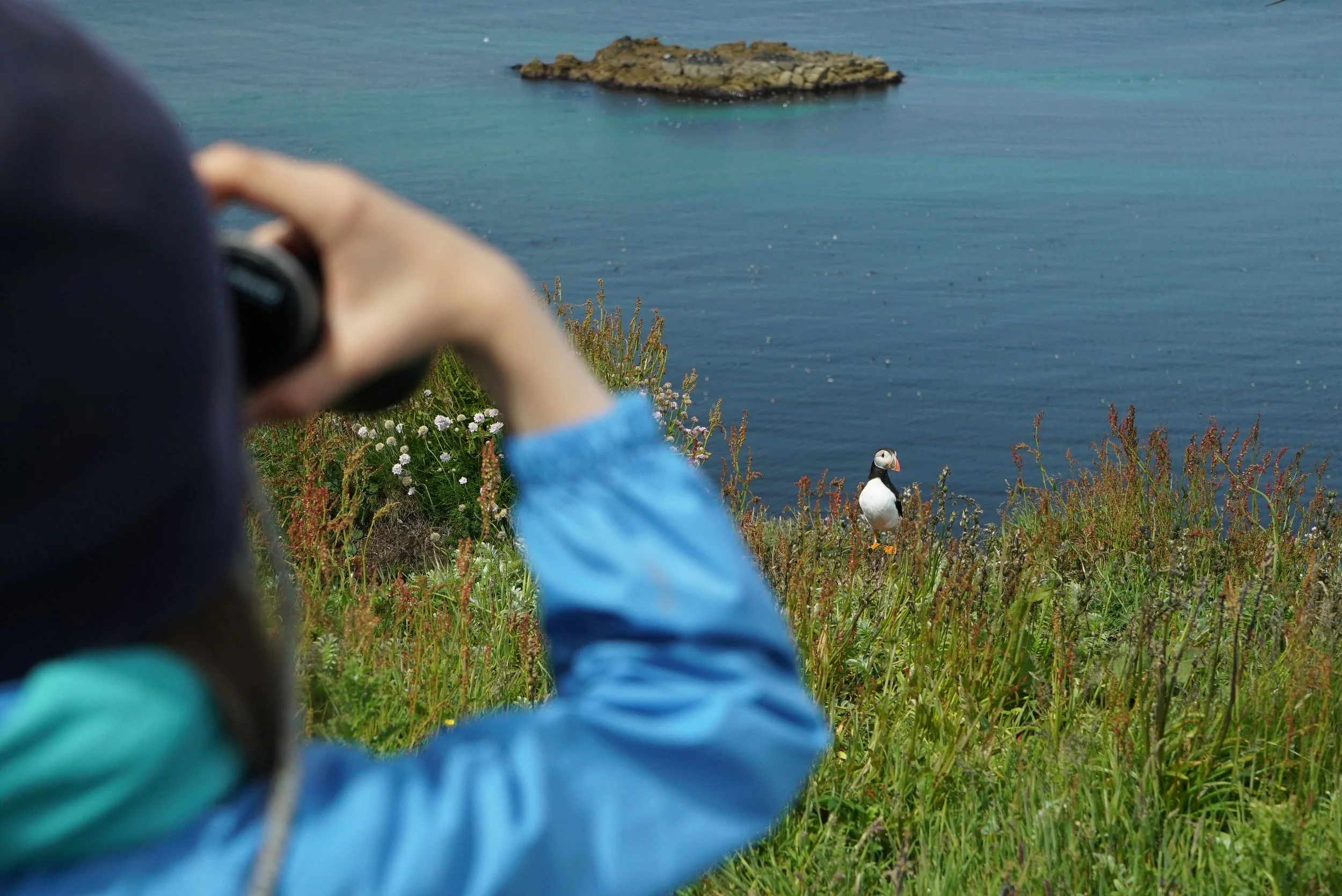
This session invited the children to think about the islands from a different perspective – not from the shore or the caves, but from the sky. Emily led a series of interactive activities exploring seabirds, their habitats, migration journeys and the remarkable ways they are connected to the ocean. Together, we thought about the birds that visit and nest around Iona and how many of them travel vast distances across the seas, linking places as far apart as the Hebrides and Svalbard.
Using bird guides, charts and reference books, the children carefully researched different seabird species before creating cut-out bird silhouettes. These will become part of a large cyanotype artwork that we will make together next week.
Looking at the wide variety of bird shapes sparked a conversation about how animals experience the world differently from humans. How does a gull see the shoreline from above? What might an Arctic tern notice on its extraordinary migration between the Arctic and Antarctic? How does a bird's perspective change its understanding of the landscape?
To help us explore these questions, each child made a simple camera obscura. This ingenious device uses a tiny hole to let light into a dark space, projecting an image of the outside world upside down. The children were amazed to discover trees, buildings and people appearing inverted inside their handmade viewers. It was a fun introduction to the science of light and vision, while also encouraging us to think about how perspective shapes what we see and understand.
We finished the day by preparing for our upcoming video call with the children in Svalbard. Together, we revisited the questions we had written and the replies we had received. There was much excitement as we discovered similarities between our island communities, alongside differences too. The children were particularly interested in comparing landscapes, wildlife, weather and daily life from favourite foods to sports and games.
Our thanks go to Emily for bringing her knowledge to the project. By the end of the day, the children had travelled from seabird migrations to upside-down worlds and from Iona to Svalbard, all without leaving the Village Hall.