Tidal Pools and Ink
Building on our visit to the cave the previous week, the children returned to their field notebooks, using the sketches, observations and notes they had made on site as the starting point for a printmaking session.
Their first task was to transfer a drawing of the cave onto the silver inner surface of a recycled Tetra Pak carton. Using simple etching tools, they engraved lines and textures into the surface, creating a printing plate from what would otherwise have been waste material. This is one of the reasons Tetra Pak printing is such a wonderful process for schools and community projects: it gives new life to discarded packaging, requires very little specialist equipment, and encourages us to think creatively about reuse and sustainability.
Then came the really exciting part. The plates were inked up and, rather than using a traditional printing press, we fed them through a pasta machine! The pressure of the rollers transfers the ink from the plate onto paper, producing beautiful prints full of texture and character. There is always a little magic in the moment when the paper is lifted to reveal the image underneath, and the results were fantastic.
What makes Tetra Pak printing so much fun is that it combines drawing, recycling, experimentation and surprise. Every print is slightly different, and the process encourages children to embrace happy accidents and unexpected marks. The cave drawings that emerged captured not only what the children had seen, but also something of the atmosphere of the place itself.
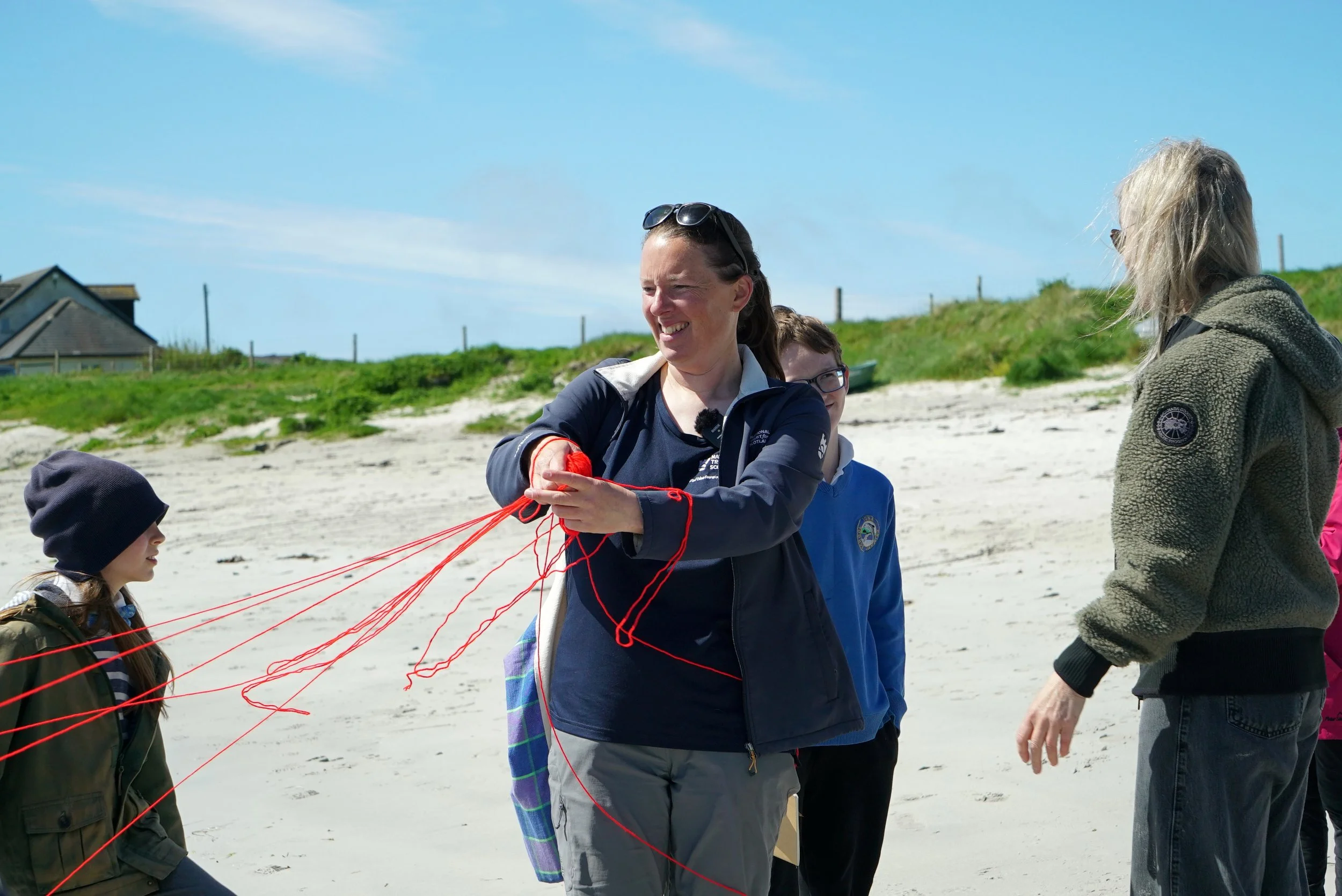
We were delighted to welcome back National Trust for Scotland ranger Emily Wilkins for another fantastic session, this time exploring the shoreline around Iona.
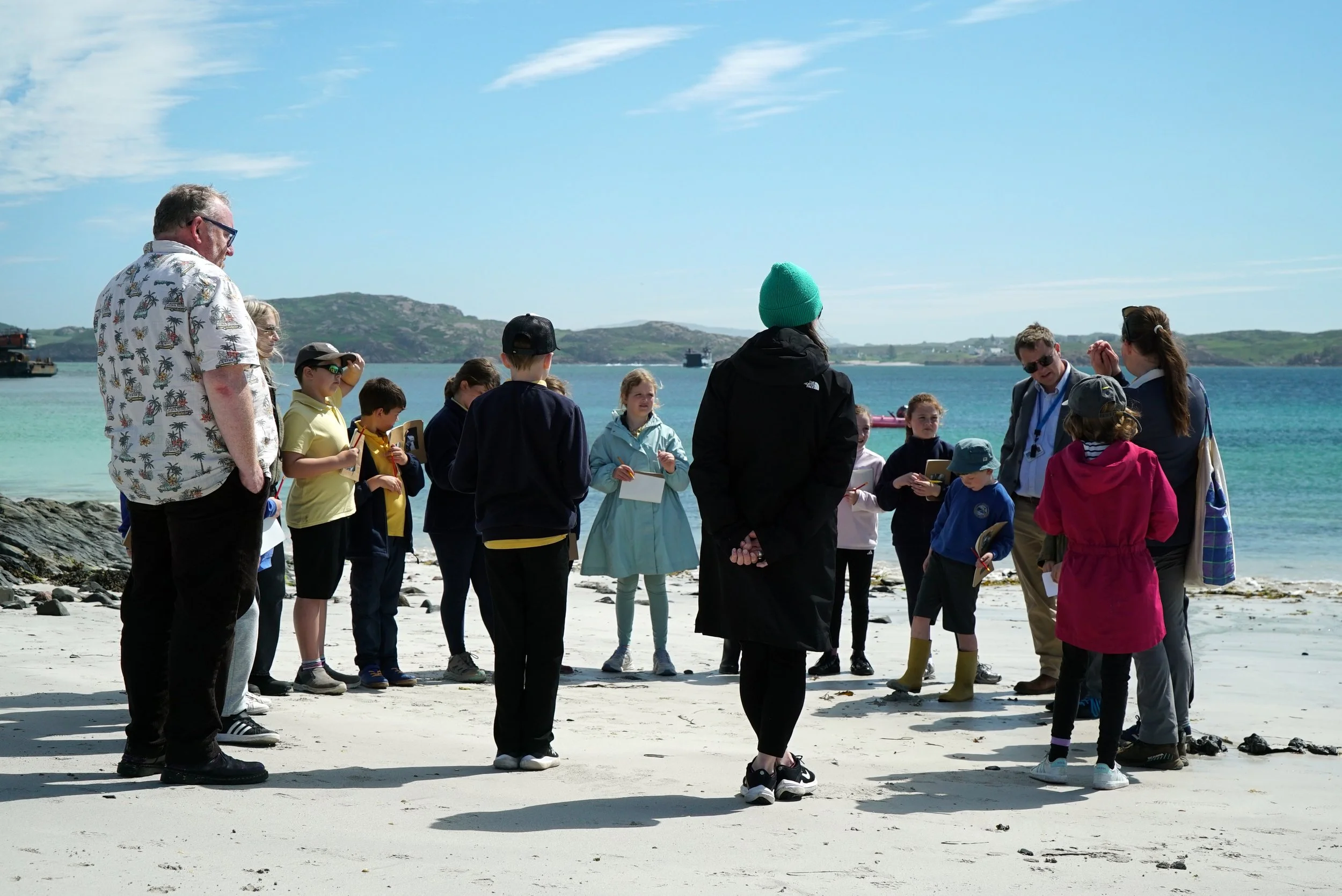
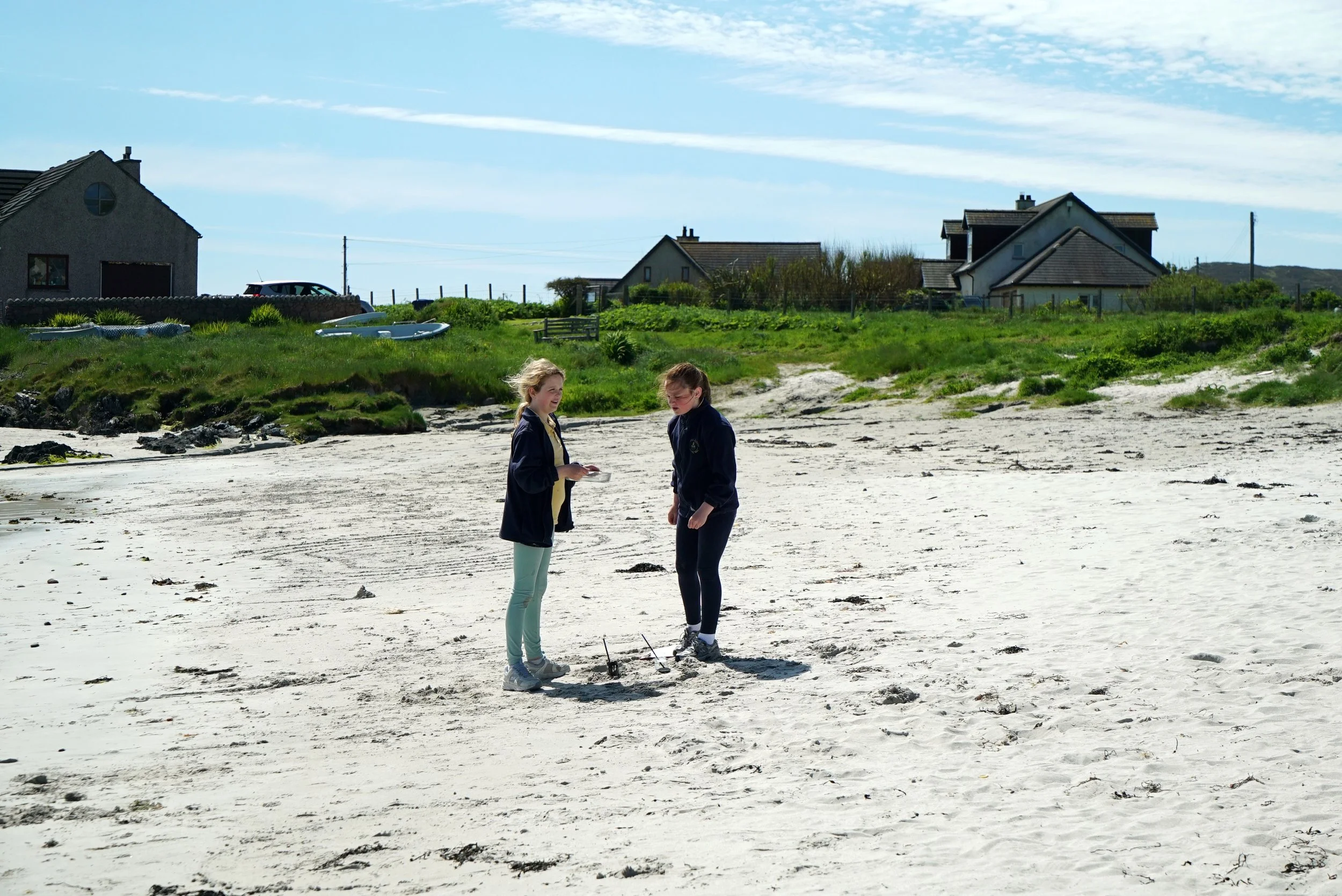
Armed with sketchbooks, curiosity and plenty of enthusiasm, the children headed to the beach to investigate the rich variety of life living in the island's tidal pools. Emily helped them identify different marine creatures and encouraged them to look closely at the habitats these animals depend upon. Along the way, the children made field notes and drawings, recording their observations just as naturalists and scientists do.
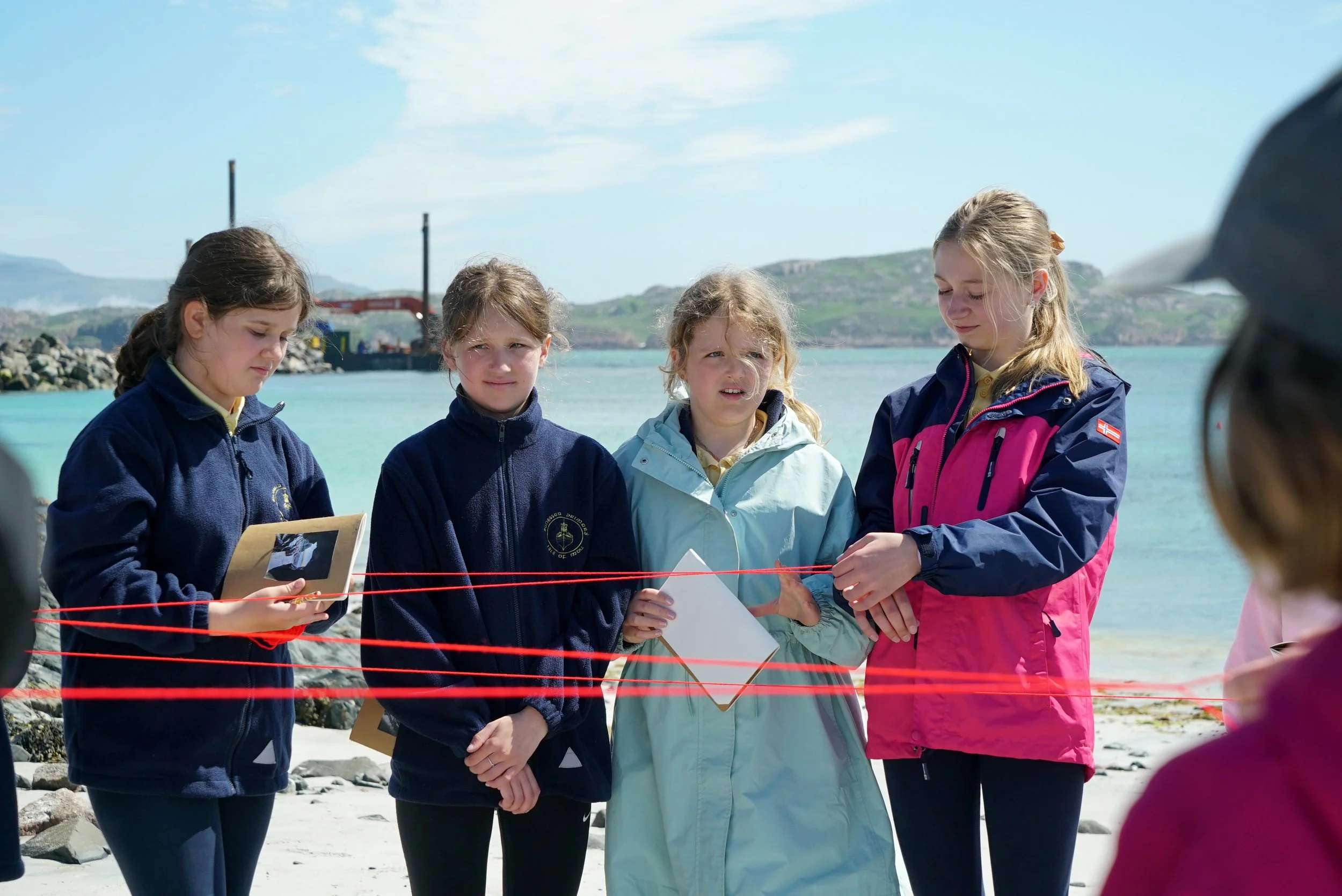
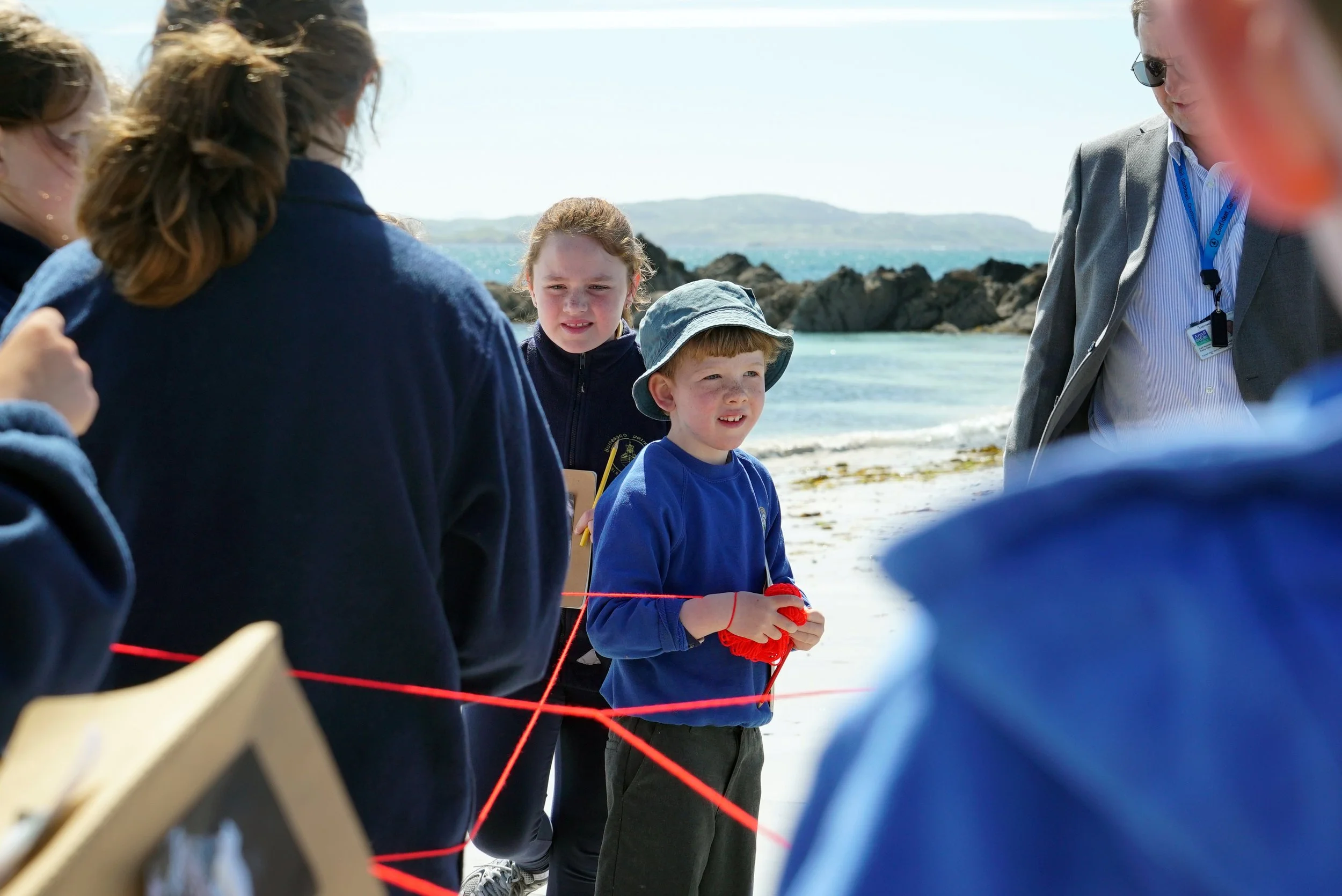
One of the highlights of the morning was a lively game exploring the "web of life". Using the species they had discovered on the shore, the children worked together to build connections between different plants, animals and habitats, revealing just how interdependent life in the marine environment really is. It was a wonderful way to understand that even the smallest creatures play an important role within a larger ecological system.
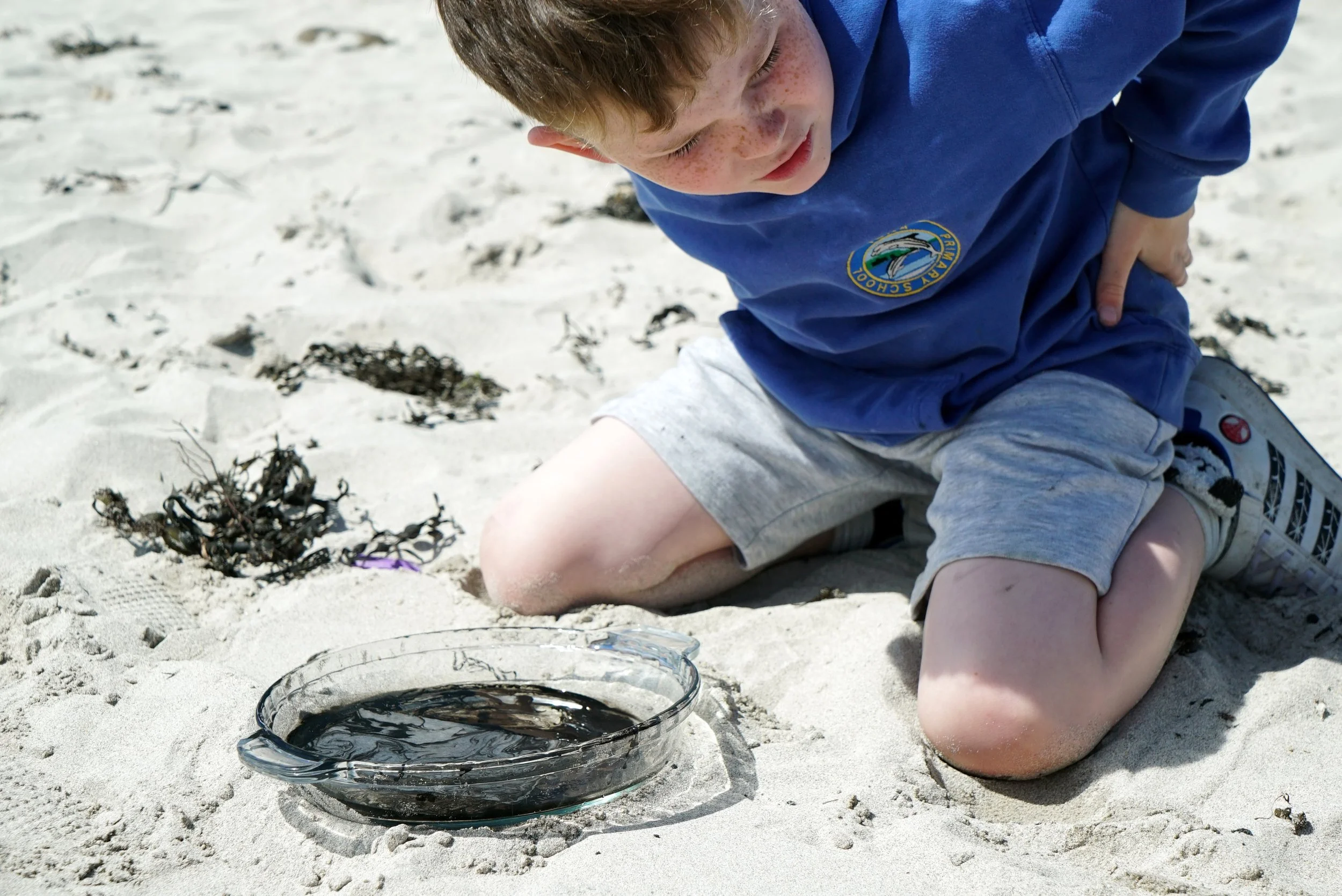
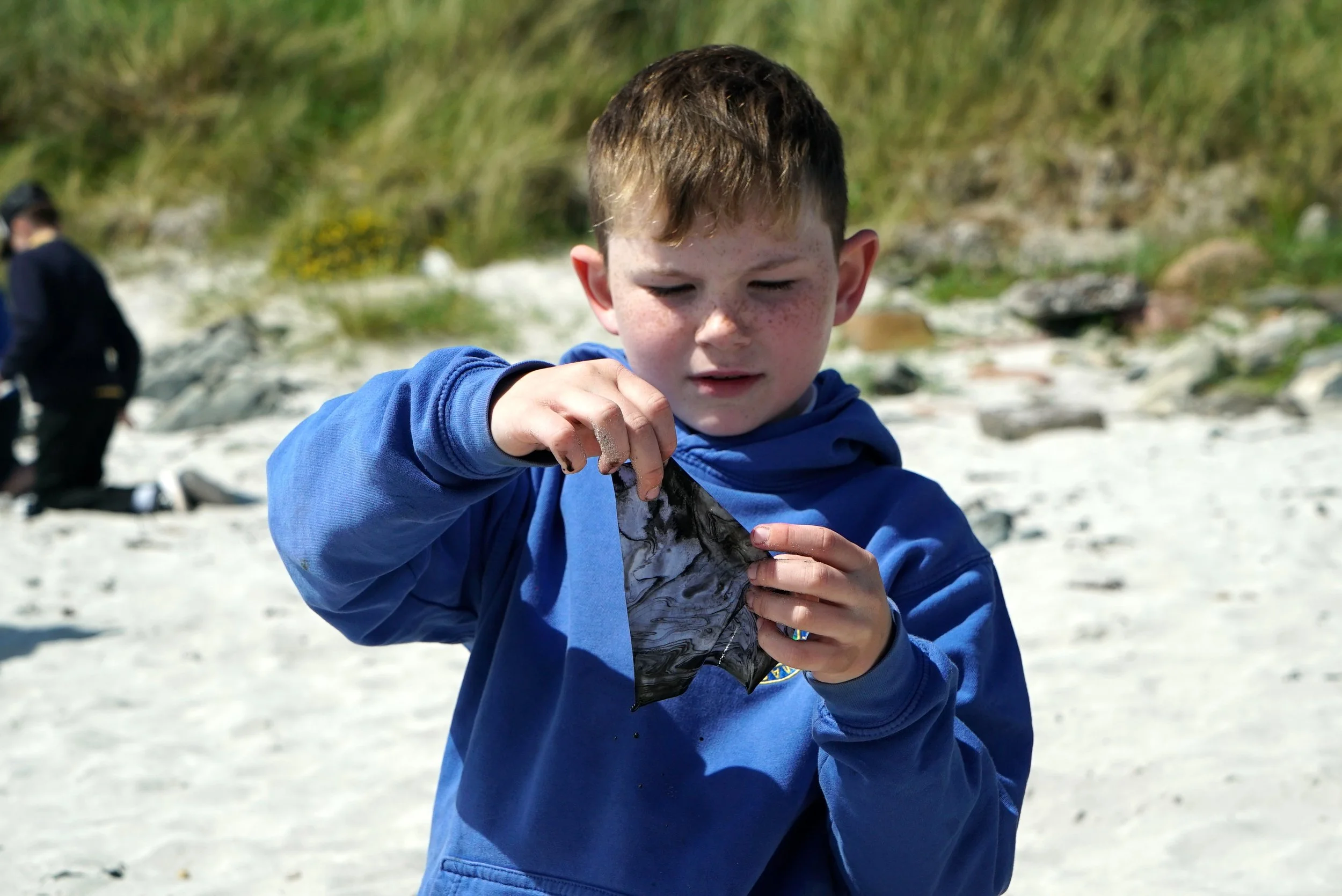
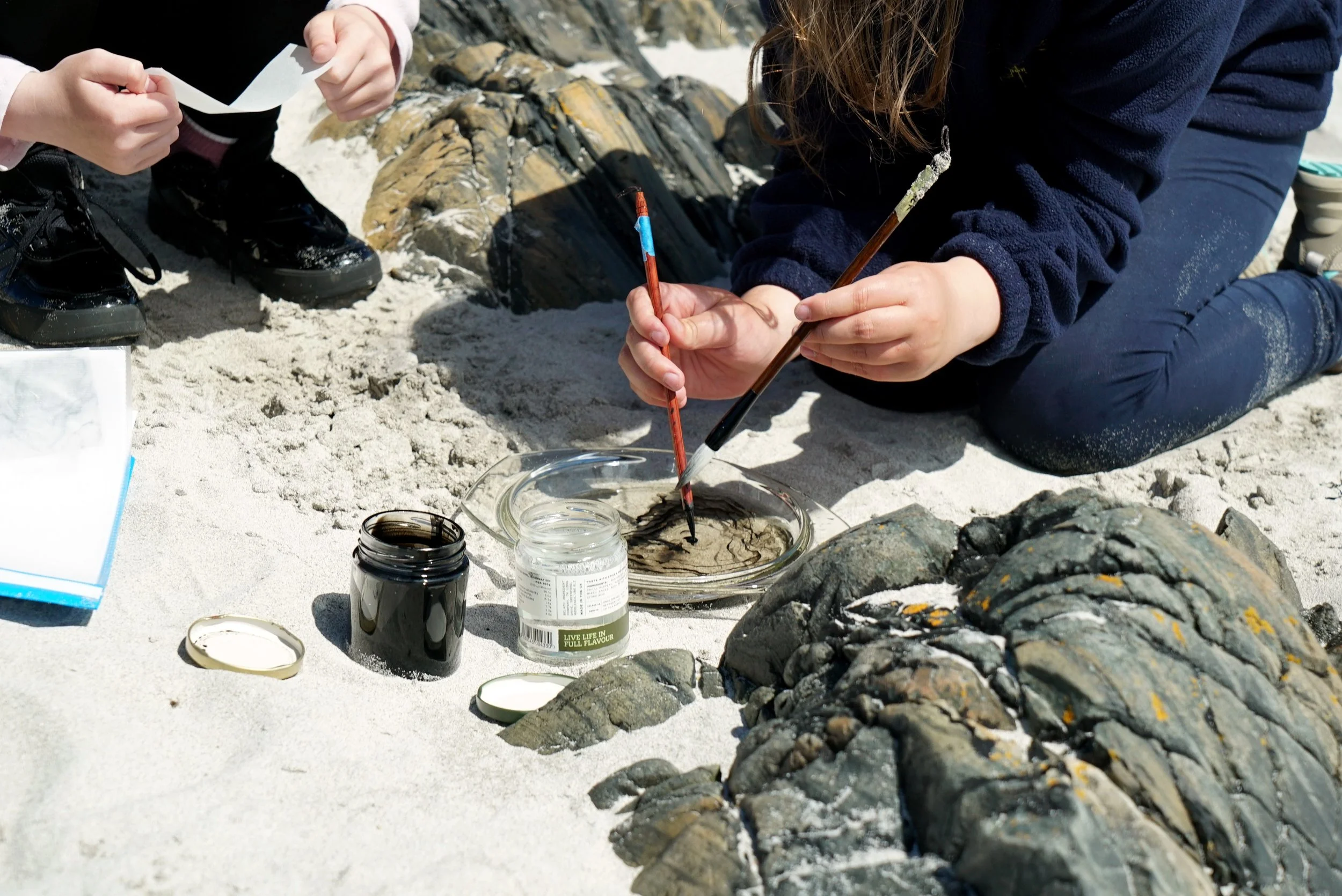
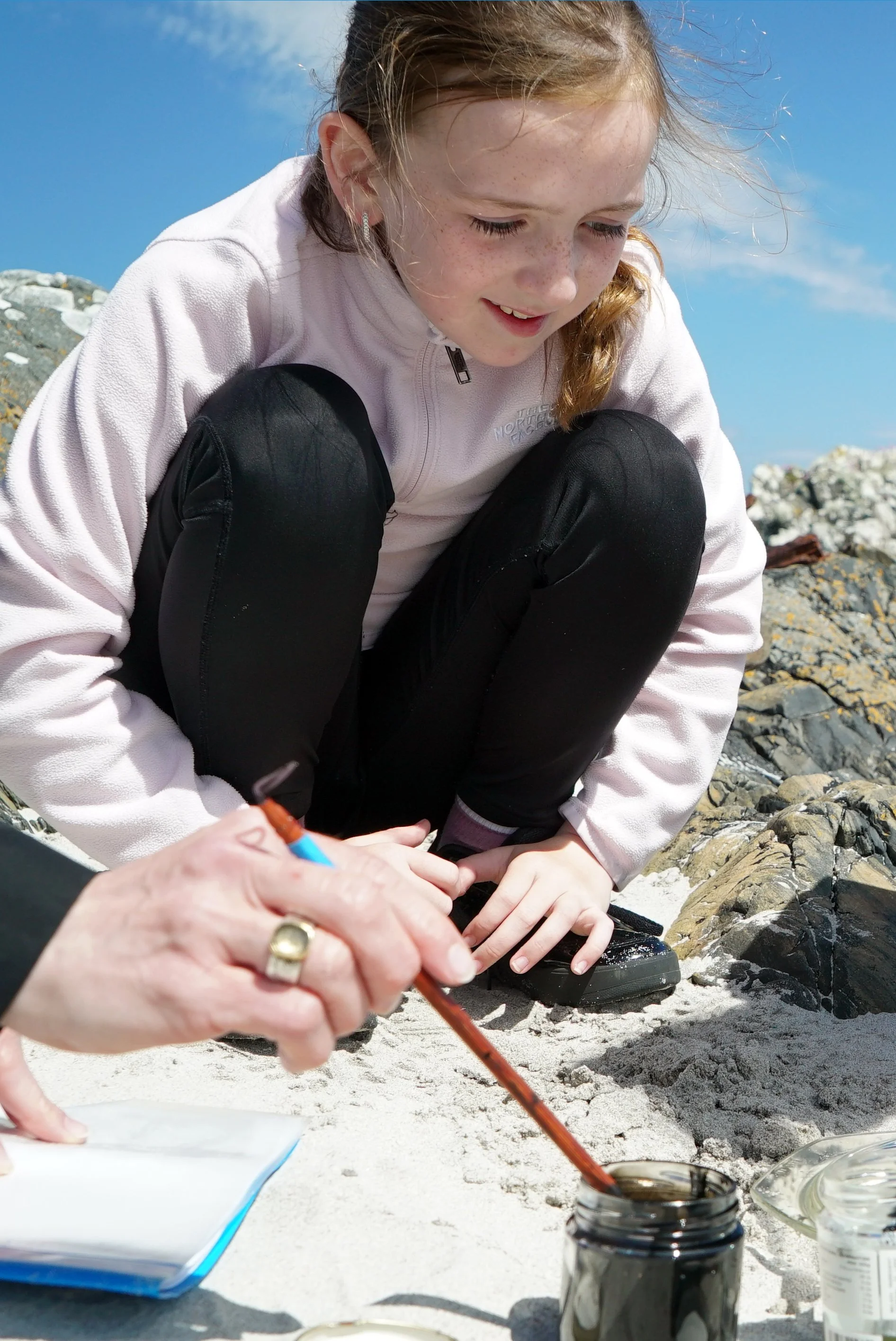
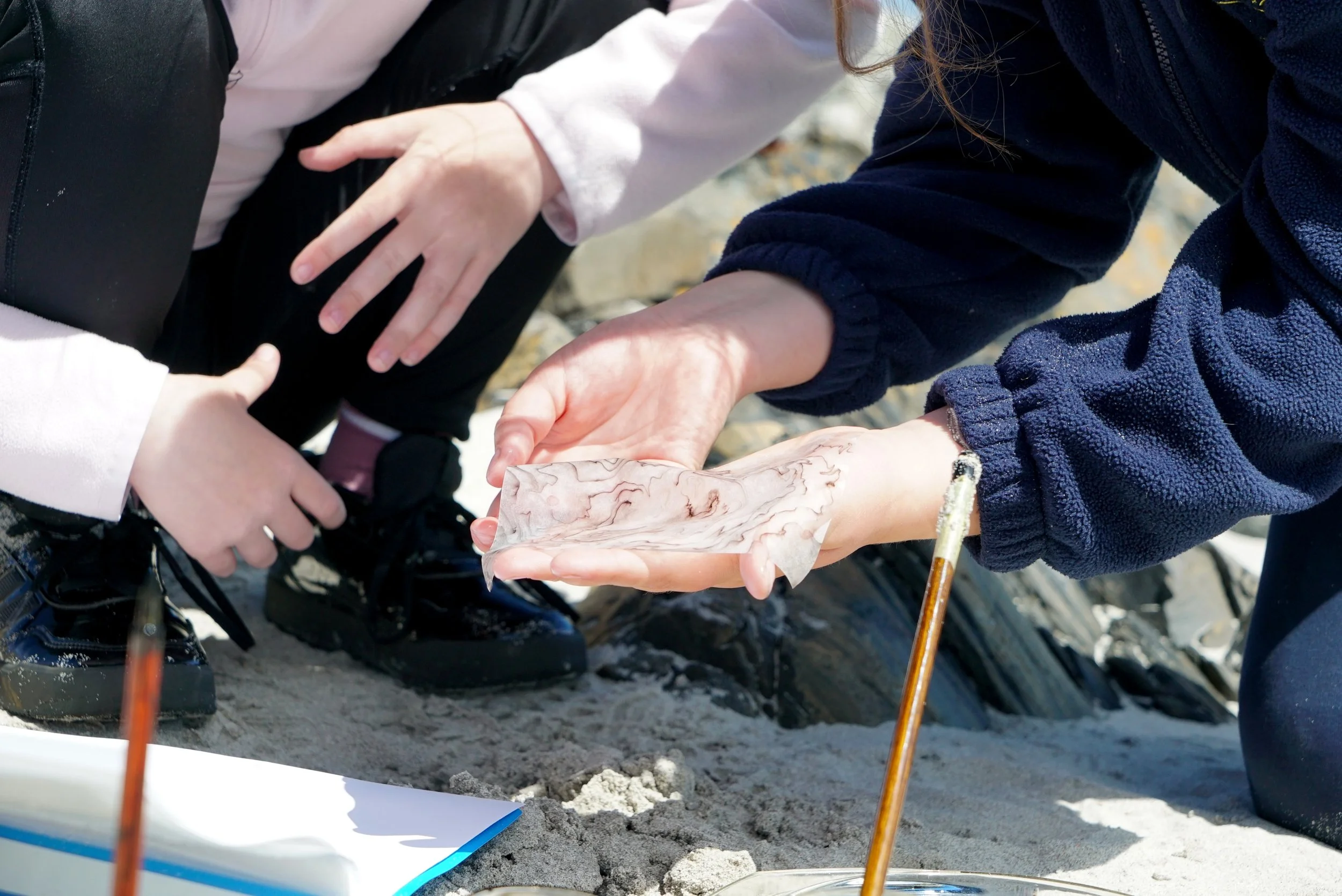
After all that exploring, it was time for some art-making on the beach. Despite a brisk wind and more than a little sand, the children experimented with suminagashi, an ancient Japanese technique sometimes described as "floating ink". Droplets of ink are gently placed onto the surface of water, where they spread and swirl into beautiful patterns before being transferred onto paper. The moving ink created marbled images that echoed the rhythms of waves, currents and tides surrounding us.
Back at the Village Hall, the prints were carefully dried while the children reflected on their morning with Emily. Inspired by their time on the shore, they wrote "ocean thoughts,” short pieces capturing observations and reflections on the sea and the life it supports.
Our thanks once again to Emily for sharing her knowledge about and enthusiasm for Iona's natural environment. Through her guidance, the children were able to experience the shore not simply as a place to visit, but as a living community of interconnected species and relationships.